 Call
Call Here When You Need Us
Cremation vs Burial in Spain: Which Is Right for Expats?
Understanding the Choice
For many expats living in Spain, deciding between cremation and burial can be one of the most personal and practical choices they’ll ever make.
The decision often depends on family tradition, personal beliefs, cost, and the question of where loved ones want their final resting place to be.
While both options are dignified and regulated under Spanish law, cremation has become the preferred choice for many expats because it offers greater flexibility — especially when family members are spread across different countries.
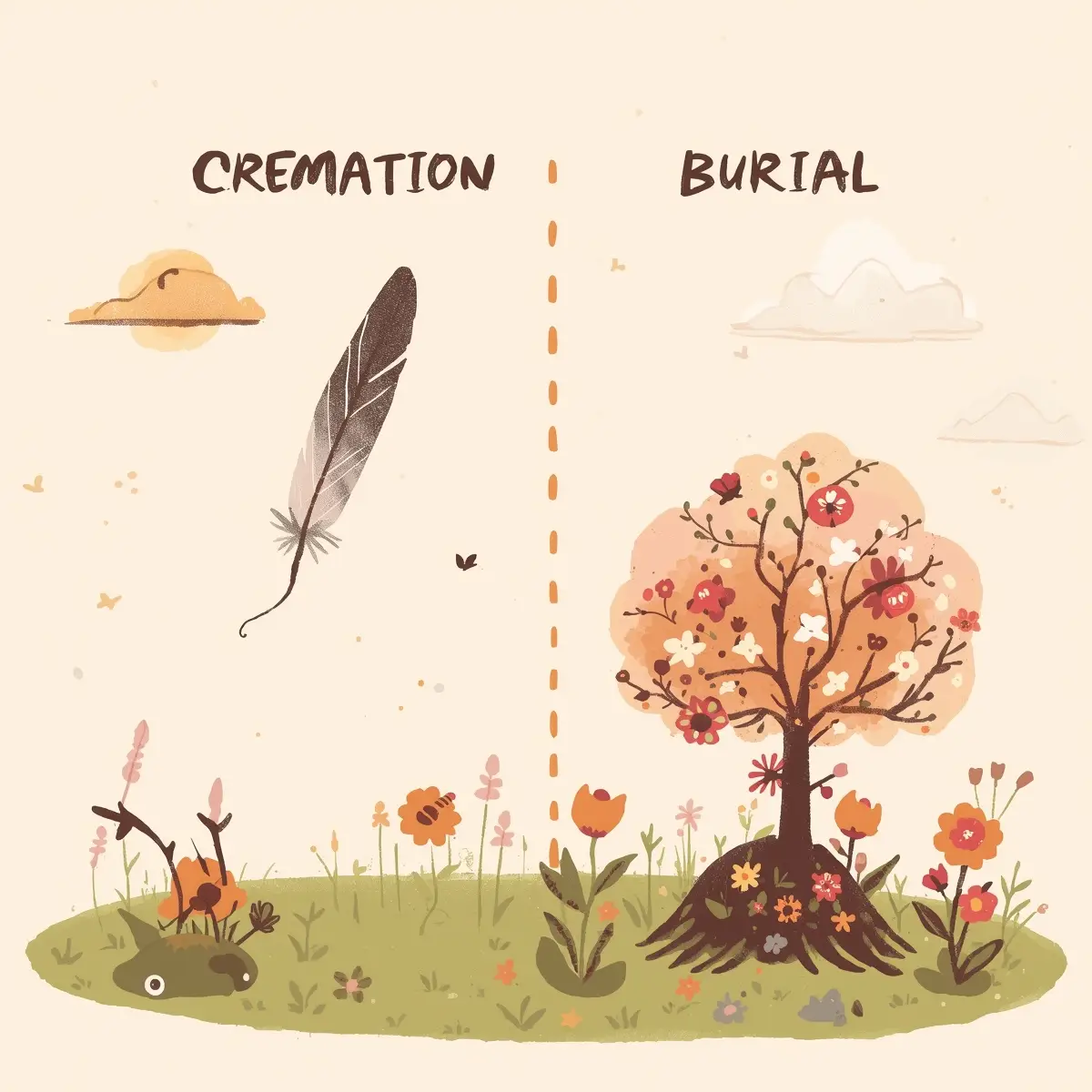
Cremation and Burial in Spain: Key Differences
- Legal timelines in Spain
In Spain, funerals and cremations usually take place within a short legal timeframe once the death is registered. The process can be delayed if a judicial investigation is required, which directly affects whether burial or cremation can proceed. - Role of the Civil Registry
All deaths in Spain must be registered with the local Civil Registry before burial or cremation is authorised. This administrative step is mandatory and can influence timing, documentation, and next steps for families. - Cultural and religious considerations
Burial has traditionally been the most common option in Spain, particularly within Catholic communities, although cremation has become increasingly accepted in recent decades. Local customs and family preferences may still influence which option is chosen. - Real cost differences within Spain
The cost difference between cremation and burial in Spain is often significant. Burial typically involves cemetery fees and longer-term concessions, while cremation is generally more straightforward and cost-effective, especially in urban areas. - Impact on international repatriation
Cremation is often the preferred option when remains need to be repatriated abroad, as transporting ashes is usually faster and involves fewer logistical and legal requirements than transporting a coffin from Spain. - Judicial involvement in certain deaths
If a death is classified as judicial (for example, sudden or unexplained), Spanish courts may require an autopsy. In these cases, neither burial nor cremation can take place until judicial authorisation is granted, regardless of the family’s preference.
Need immediate Help or Guidance?
If you’re arranging a funeral or need advice about cremation, burial or repatriation our team is available 24/7 to assist you — with no commitment required.
🟢 Scan to message us instantly on WhatsApp

No waiting – In any language
📞 Call or WhatsApp us on (+34) 640 034 791
📧 Email: support@funecon.es
Related guides for families in Spain
These guides are part of our essential guides list for families who need to organise a service for a loved one.
- Repatriation from Spain: A complete guide for expats and tourists
- When the courts get involved: Autopsy and judicial death investigations in Spain – If a loved one dies unexpectedly at home.
Cultural Context in Spain
Historically, burial was the dominant funeral practice in Spain, rooted in Catholic tradition.
However, over the last two decades, cremation rates have risen sharply across the country, with many urban areas — especially Málaga, Alicante, Barcelona, and Sevilla — now seeing more cremations than burials each year.
For expats, this shift mirrors trends seen across Europe, where families increasingly prefer simpler, more adaptable arrangements.
Cremation fits naturally into this modern lifestyle, offering both cost and logistical advantages without compromising on respect or ceremony.
Legal Framework and Requirements
Both cremation and burial in Spain require the same initial steps:
- An official medical death certificate
- Registration of death at the local Civil Registry
- Authorisation from the health authorities
Cremation generally takes place within 24–48 hours once documentation is complete, while burials may occur slightly sooner depending on local regulations and cemetery scheduling.
In both cases, families are supported through the process by a licensed funeral director who handles all paperwork, coordination, and logistics.
The Practical Differences Between Cremation and Burial
While the procedures share many formalities, there are key differences that can affect the overall experience — both emotionally and financially.
Cremation
- Requires fewer logistical steps and less coordination between different agencies.
- Does not involve purchasing or renting a burial niche (space in a cemetery).
- Offers the flexibility to hold a ceremony later, in Spain or abroad.
- Makes repatriation of ashes far simpler and more affordable.
- Typically takes place in a licensed crematorium within one to two days.
Burial
- Involves securing a cemetery niche or plot, often for a set term (10–50 years).
- May include additional local taxes and maintenance fees.
- Requires cemetery availability, which can be limited in major cities.
- Can include a full religious or civil ceremony before interment.
- May involve higher long-term costs for families who live outside Spain.
Both options can be organised with respect and professionalism, but for many international residents, cremation is the more practical and accessible choice.
Comparing Costs and Logistics
In Spain, funerals are typically more affordable than in Northern Europe, but there are still notable cost differences between cremation and burial.
Cremation is generally the lower-cost and simpler option, while burial tends to include several variables that increase the final price.
To understand the breakdown more precisely, readers can explore our detailed guides:
- Funeral Costs in Spain 2025 | What Expats Need to Know
- Direct Cremation in Spain: A Complete Guide for Expats
These articles explain how regional factors, niche rentals, and crematorium fees influence total costs — and why transparent providers are essential for avoiding unexpected expenses.
Space and Sustainability Considerations
As Spain’s population grows and urban areas expand, many cemeteries face limitations on available plots.
In popular regions like Málaga, Alicante, and Barcelona, burial space is often scarce, and rental terms for niches can be expensive or time-limited.
Cremation, on the other hand, requires less physical space and is increasingly viewed as a more sustainable option, reducing land use and long-term environmental impact.
Many modern crematoria in Spain now use energy-efficient systems that meet EU environmental standards.
Emotional and Family Factors
The choice between cremation and burial isn’t only about cost or practicality — it’s deeply emotional.
Some families find comfort in having a physical resting place they can visit, while others prefer the freedom of scattering ashes somewhere meaningful.
For expats, cremation often feels like the natural option when families live across several countries.
It allows ashes to be divided among relatives or transported easily for a memorial at home.
This flexibility can bring peace of mind to those who wish to remain connected to both Spain and their country of origin.
Religious and Cultural Flexibility
Spain’s funeral system accommodates both religious and non-religious services.
Burials can follow Catholic rites or be entirely civil, while cremations can include a short blessing or private reflection before the process.
Many expats choose a direct cremation — a simple arrangement without ceremony — followed later by a memorial service in their home language or faith tradition.
This approach allows time for family members to travel and gather when they are ready, rather than rushing arrangements within 24 hours.
The Role of Modern Funeral Providers
Today’s funeral providers in Spain understand the needs of international families.
They manage paperwork in multiple languages, coordinate transportation, and provide full transparency on what’s included in every service.
The best providers offer clear communication, nationwide coverage, and flexible payment options.
For expats living alone or without close relatives nearby, having a reliable funeral plan or pre-arranged agreement can ensure their wishes are respected and their families aren’t left struggling with decisions at a difficult time.
When Burial Might Still Be the Right Choice
Despite the growing popularity of cremation, some families still prefer burial — often for cultural, religious, or personal reasons.
It provides a permanent place of remembrance and continuity for future generations.
In rural areas of Spain, local tradition still favours burial, and costs may be lower than in large cities.
For those with long-term residence and established community ties, burial remains a meaningful option — especially when family members live nearby to tend to the site.
Why Many Expats Choose Cremation
Cremation offers simplicity, affordability, and freedom.
It eliminates many logistical challenges and allows families to personalise their farewells.
For expats who wish for their ashes to be returned home or shared among relatives, it’s often the most practical and emotionally suitable choice.
The ability to plan a ceremony later — perhaps on a favourite beach, at sea, or in a family garden — allows loved ones to say goodbye on their own terms.
This emotional flexibility, combined with transparent pricing and straightforward paperwork, explains why cremation has become the preferred choice for many international residents in Spain.
Some additional guides which may help you
Planning for end of life Funeral Plans in Spain for Expats | Costs, Risks & Alternatives
What do you do when someone passes away in Spain What to Do When Someone Dies in Spain – Step-by-Step Guide | Funecon
We have also created a complete set of funeral guides for families in Spain
🕊️ Need Help or Guidance?
If you’re arranging a funeral or need advice about cremation, our team is available 24/7 to assist you — with no commitment required.
📞 Call or WhatsApp us on (+34) 640 034 791
📧 Email: support@funecon.es
🌐 Contact us online
Have questions? Want us to visit your area for a Coffee Morning?
We’re here to help. Leave your details below if you’d like a no-obligation call, or if you’d like us to arrange a Coffee Morning in your town. Our goal is to bring clarity, peace of mind, and honest information to the expat community in Spain.